I recently had a post about British vs. American English terminology. It was sparked by a YouTube video I watched where Irish people were taste testing different American sandwiches. Since then, YouTube made a few other recommendations for me, on stereotypes different countries or cultures have of one another and so forth. Though perhaps not directly related, this all sparked a memory of when I was a teenager on vacation in Orlando, Florida.
I visited a lot of Orlando tourist sites at that time: Disney World and Epcot Center, Cypress Gardens and Sea World. My parents and I also ate at some novelty restaurants. One of them was a British fish and chips place. There are a couple of Irish pubs near me in New Jersey that serve excellent fish and chips. This place was different, with an indoor bright red double decker bus for seating and one of the famous London red phone booths for atmosphere. I wish I could remember the name of the place. I have a feeling it no longer exists. I tried Googling it but couldn't seem to find a restaurant of that description.
A British tourist sat alone at a table near us. While we were being adventurous and enjoying our French fries/"chips" with the traditional malt vinegar, the British tourist reached for the more American condiment on the table ... a bottle of ketchup. "Heinz?" he says as he grasps the ketchup bottle. "This isn't American! This is German!"
That moment has sparked quite a lot of thought since then, even some twenty some years later. If I had been bolder, I might have started a conversation with the tourist, and we could have had quite the discussion on German-Americans and their influence on American culture. My mother does remember telling him that Americans are made up of all sorts of people.
I have to wonder what the guy was thinking. Surely, he must know that America is a land of immigrants. He might make that observation by watching the people that surrounded him in Orlando, unless he assumed that half of them were foreign tourists just as he was. Orlando, and Disney World in particular, does attract a lot of foreign tourists as well as American ones. Maybe his British pride believed that the majority of us were of English heritage and have nice little English surnames or that an American ketchup company established as far back as 1869 surely must have an English sounding name. German-Americans have not been here as long as the English, who were, of course, our first settlers, but they have been here quite a while and have been influential on a lot of very American things, including ketchup.
My ketchup-eating friend might be surprised to learn that, these days, Americans of German heritage actually outnumber those of English heritage. According to a 2013 U.S. Census, there are more Americans of German roots, 46 million, than Irish, 33 million, or English, 25 million. Personally, I'm a good mixture of both, with more or less equal parts German and English coming from both parents. It turns out, after one of my brothers took a DNA test through ancestry.com, that my heritage is a bit more complicated than that. Still, this is true.
What can be more American than a hot dog? Not only was America's chief ketchup company started by a German-American, but the foods that commonly accompany ketchup can be traced to German-Americans as well.
There are a few different origin stories of the hamburger and hot dog, so it doesn't seem to be completely settled. Think of the alternate names for the hot dog: frankfurter or weiner, both names relating to European cities, either Frankfurt, Germany or Vienna (Wien,) Austria. Some stories claim that these sausages began in these European cities, predating America. They were later introduced to America by immigrants. It could also be that the American hot dog is slightly different than either of these.
American hot dogs were first called "little dachshund sausages." There's one claim that a German immigrant sold them with sauerkraut and milk rolls from a push cart in New York City's Bowery in the 1860s. Charles Feltman, a German baker, began selling dachshund sausages at Coney Island in 1871.
German-Americans are the reason we sometimes accompany the American hot dog with this odd food with the very German sounding name.
Sauerkraut
The hamburger is another American food with a very German sounding name, hamburger as in from Hamburg. It likely started first as Hamburg steak, a steak made up of ground beef, a food familiar to German immigrants. It's not really clear who first had the idea to serve it in a roll as a sandwich.
The Hamburg America Line shipping company employed many German immigrants in the 1840s. Ships from Hamburg often came to New York City, and city restaurants began serving Hamburg steak to get business from the German sailors. The hamburger as a sandwich seems to come out of street vendors for major events such as amusement parks and fairs. There are a few different controversial ideas of who invented and/or popularized the sandwich.
Yes, Henry J. Heinz, the son of German immigrants, began his company in 1869, producing and bottling several food products, including ketchup. Heinz isn't the only German surname you will find in major American food companies (and other big companies besides.)
Henry J. Heinz
How about Oscar Meyer, a producer of hot dogs, bologna and other meats?
Oscar Mayer
How about Claussen pickles? Or many or our pretzel companies that have names like Utz, which sells Bachmann pretzels, Sturgis and Snyder of Hanover?
Just about every American beer brewer seems to be started by a German-American, with names like Anheuser-Busch (producer of Budweiser), Coors, Pabst and Schlitz. Although perhaps not as obvious, Wikipedia lists Frederick Miller, creator of Miller beer, as a German-American. Beer and pretzels. Should this be surprising?
As a nice little teetotaler personally, I'll just post a photo of these pretty Anheuser-Busch Clydesdales.
Also, Milton Hershey of Hershey Chocolate, was a German-American.
Milton Hershey
There are other German-Americans who gave their names to big American businesses, unrelated to foods. What about Boeing aircraft? Or Pfizer and Merck pharmaceuticals? There are many others.
Here are some other German-Americans who made great contributions in the arts.
Charles Schulz, the artist behind Peanuts and Snoopy.
Dr. Theodore Seuss Geisel, (Dr. Seuss,) author of The Cat in the Hat, Green Eggs and Ham and many other beloved children's stories.
L. Frank Baum, author of The Wizard of Oz and Oz series books.
German-Americans have made a lot of contributions to American culture.
John Tino and I at the 9/11 Memorial Pools in New York City
I don't remember precisely at what point I became a little bit familiar with the Maasai tribe. I did, however, come to a point where I was able to recognize this tribe in photographs by their distinctive dress and physical characteristics. In a book I was recently reading, "Maasai" by Tepilit Ole Saitoti and Carol Beckwith, they are described as a beautiful people. That is my exact impression. There is something very striking about their red clothing, beaded accessories and figures which seem to be long and lean. I came across a website that claims the Maasai and Watusi tribes are among the tallest people in the world.
Recently, my knowledge of the Maasai tribe has increased. How? I had a Maasai warrior visiting me in my home. My retired father is now on the board for About-Face Missions (AFM), an organization that helps support indigenous pastors in various parts of the world. AFM arranged for John Tino, a Kenyan Maasai pastor, to visit the States for four months and speak at various churches. My parents and I had John as our guest for four days.
I was excited about his visit but had some concerns. Would we be able to relate? Would we find things to talk about? How would we entertain him? Would he like the food we gave him?
In spite of these concerns, everything went quite well. I don't have a photo of John when he first arrived at the house, but he arrived wearing his traditional Maasai clothing as well as beaded necklaces, headband and armbands, what later he charmingly referred to as "all those funny Maasai things." The only item of his clothing that was not quite so traditional was a pair of multi-colored striped socks which -- I guessed correctly -- he wore to keep himself warm in our comparatively colder weather.
Although John is Internet savvy and owns a smart phone, coming to the States, such technology as flushable toilets and escalators were novel to him. His first experience on an airport escalator didn't go so well. "I fell on my back," he said.
We had no difficulty communicating at all. John's English was good, although he humbly insisted it was very poor. I did have less trouble understanding him than my parents did and sometimes found myself in the position of "translator." I'm not sure why this is, except that I have a knack for languages and have been exposed to the Swahili accent before. (Additionally, in a college linguistics class, we actually did a little study in Swahili.) At one point, John asked, "How come she understands my language?"
John Tino and I at breakfast
On his first day with us, he shared some videos about his culture and also brought out the big coffee table book mentioned in my first paragraph. Later, while the jet-lagged John napped, I dove into the book and learned all about the significant Maasai ceremonies and traditions.
Some Maasai songs and dances ...
Maasai life is centered all around cattle. Traditionally, the diet has consisted of milk, sometimes mixed with blood from the cattle, and only occasionally beef. The Maasai people are semi-nomadic and travel back and forth across the Kenya-Tanzania border, as the seasons change, and where the cattle can find grass. They also sometimes go on cattle raids, believing that all cattle belong to the Maasai.
John spoke at our church on Sunday. He gave a short sermon on integrity and then shared with us about the needs of his people. There are so many. A big one is a need for clean water and a well. There are children he knows who need specific medical care or sponsors to help them through school. Girls need feminine hygiene products so they don't need to miss school. You can donate to help with some of these needs through this website.
John Tino preaching at Chapel on the Hill in Cedar Grove, New Jersey
Display of Maasai items in the church foyer. At the bottom are calabash gourds for carrying milk.
Although we didn't expect it, John presented my entire family with gifts at the service. My gift was a traditional Maasai necklace with "bling bling." I was surprised and a little amused that John had learned this bit of American slang. He had picked it up from the AFM founder when he stayed with him in Texas. My necklace was crafted by his wife, Mercy, who was unable to travel with him. The "bling bling," the dangling metal medallions, are arranged in a V shape. Later, I wore this with a V-neck blouse and the shapes were very complementary.
John Tino presenting me with my "bling bling."
My mother's necklace was blingless but instead consisted of long twisted strands of beads. John guessed rightly that she would prefer a necklace without all that bling bling.
My father was given a shuka which, as John pointed out, was similar to what a Maasai elder would wear.
John Tino and Dad with his shuka
We had quite a lovely time over the four days. We found our guest to be warm and affectionate and, at times, quite humorous. Charlie, a friend from church, escorted John, my father and me into New York City on Sunday afternoon to see the Freedom Tower and the 9/11 Memorial Pools. This was an important goal of John's. He had been so saddened by the events of 9/11.
I've heard it said that New Yorkers are not surprised about anything, but I wondered if John's decorative dress would seem novel and surprising even in this setting. While in the city, we passed a billboard for Broadway's "The Lion King," and I teased John that New Yorkers might think he was a cast member from the play. John did draw a little attention, all positive. While in line to get our tickets for the Freedom Tower, one man, who had traveled to Kenya in the past, started speaking to John in Swahili. A little boy in the line behind us asked John if he was a chief or a king.
I could understand why the boy could look at John and think he was a king. At the time, he was carrying his highly decorated walking stick (which is not featured in any of these photos) and I could see that the boy might interpret that as a kind of kingly staff. John himself seemed highly amused by the idea that he was a king, and, teasingly, introduced himself that way to a couple of people later, including a waitress in a restaurant and a receptionist at my workplace.
Altogether, my time with the "king" is an experience I will not forget.
I've always been very interested in different cultures, traditions and family history, my own as well as everyone else's. I'm always curious to know what people know about their family history and heritage, and it's a question I like to ask. Occasionally, I've come across people who are a little suspicious of the motive behind that question. I suppose a bigot, unfortunately, may have his own reasons for asking, but I'm not coming from that point of view. I think I have more xenophilia than xenophobia.
Every spring, some of the Greek Orthodox churches in my area host Greek cultural festivals, and, every year, as I pass the signs on my commute, I think I'm going to crash one of these festivals some time. I haven't yet. I'm not Greek or so I thought. (It turns out I may be a little bit Greek, but more on that later.) I know I would enjoy the cuisine, and Greek folk dancing always seems fascinating to me.
The photo is from thesecretgreece.gr
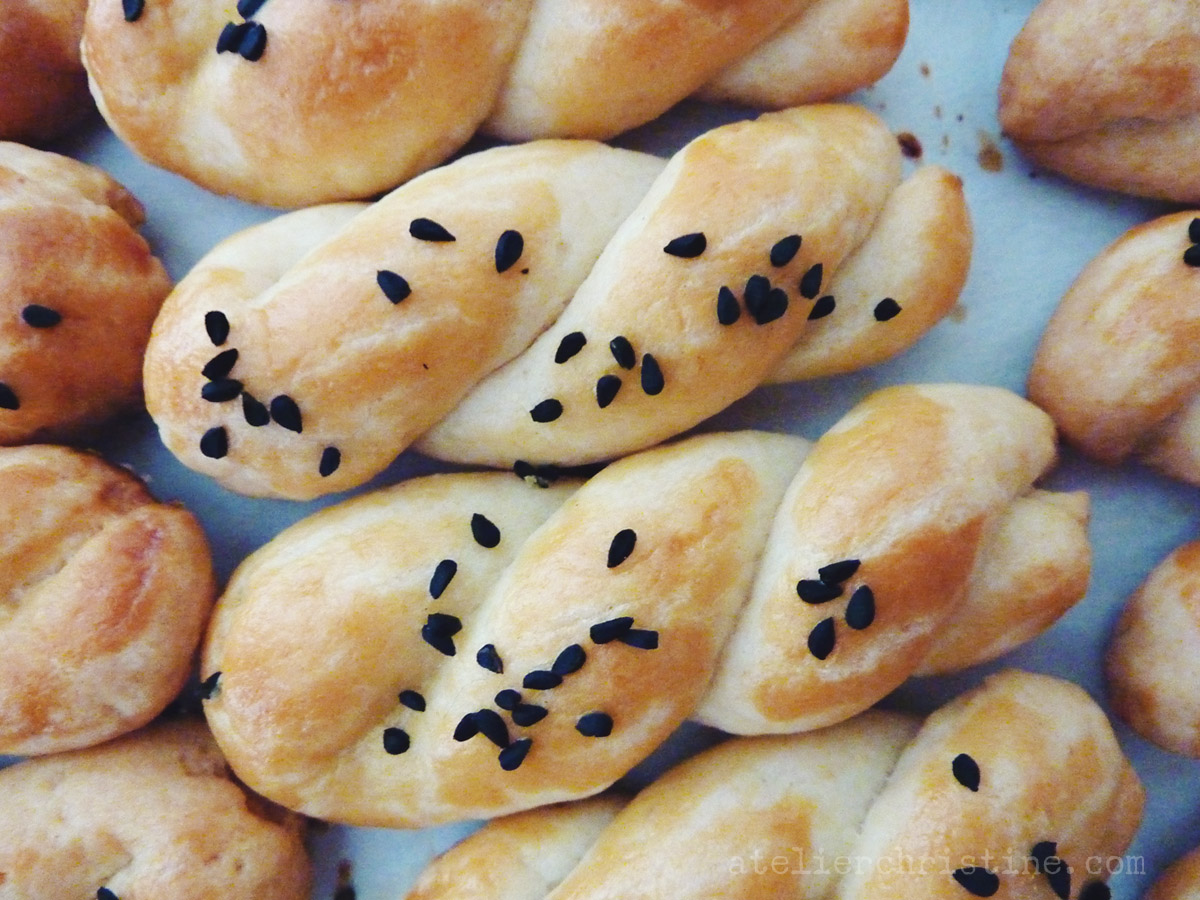
Some years ago, the newspaper where I work published some photos of an event at an Armenian Orthodox Church where some ladies were making a traditional Armenian pastry. I looked at these photos with great interest and asked our photographer questions. My editor, who happens to be Armenian, was, I think, wondering what my fascination was with Armenian pastries. I remember the women were twisting dough, so I think this may be the recipe here.
This photo is from atelierchristine.com
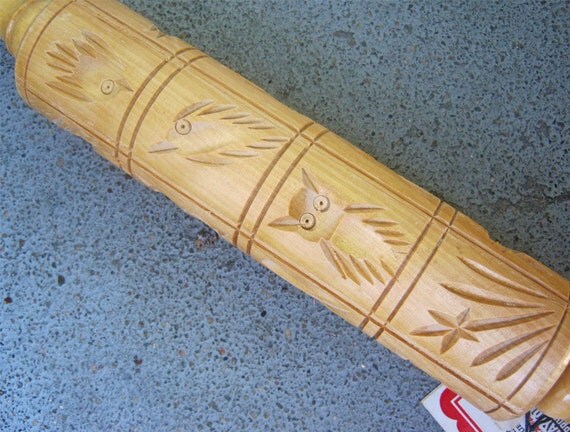
I like Old World-y traditions, and I wish I had more connection to them. I have British heritage, but I don't have an afternoon tea habit. I have German heritage, but I don't eat German cuisine, at least not very often and not often using family recipes. I do have several German cookie recipes from my paternal grandmother and a springerle rolling pin from an aunt on that side of the family. These are treasures.
The rolling pin photo above is from Etsy.com but seems similar to the one we have. A couple of Christmases ago, I used our springerle rolling pin and my grandmother's springerle recipe to honor tradition.
We do celebrate St. Patrick's Day each year with a corned beef dinner, although this is more of a tradition that my mother decided to start and continue, not one with which she grew up. Mom found a recipe in the Silver Palate cookbook for Irish soda bread which we've now made almost every year for quite some time now. We love it. It's loaded with butter and baked in an iron skillet. I usually add dried currants and caraway. The recipe is called "Grandma Clark's Irish Sodabread" in the cookbook, and people could conclude that this was our family recipe. Interestingly enough, the Irish part of my heritage is not even on the Clark side.
If you were to ask my younger self about my family history, I would have told you that I was English, German and Irish. It wasn't until I was in high school and saw some Swedish names in the Clark family tree that I knew I had any Swedish heritage. I found this quite astonishing, although Mom told me at the time that the percentage was small and didn't seem significant.
I grew up in a northern New Jersey town, Cedar Grove, that has a 29.7 percent Italian population and now live in a neighboring town, Verona, with an Italian population of 25.8 percent. My Italian school and neighborhood friends always seemed to be more closely tied to Old World cultural traditions. Some of them had grandparents or members of the family who spoke Italian. I have eaten some of the most fabulous Italian food at church pot luck dinners and community events as well as countless independent Italian restaurants in my area. I'm not complaining! I just never had quite as much sense of connection to my own heritage.
Have you seen the ancestry.com commercial for the DNA kit where a man says he discovers he's not at all German as he thought but Scottish instead? "I traded in my lederhosen for a kilt," he says.
My brother Bruce recently took the ancestry.com DNA test. Although some things confirmed what we already knew, there were quite a few surprises in those results. What would be true for my brother would be true for me too. We discovered we are of 40 percent Great Britain heritage and 22 percent Western Europe heritage. That's not the surprising part. Bruce presumed that this was mostly German, although it seems the test doesn't break it down. According to my cousin Kevin, that would include some French too.
Kevin is the family historian, looking into our genealogy and sharing his discoveries with the rest of us. He discovered that there are French Huguenots in our history on my father's side. This seems to make sense, because we have ancestors from Alsace-Lorraine, actually on both sides of the family.
For the past two years, I have performed with my Salt and Light Puppet Team for an Oktoberfest event at my church. In the first one, I did a little skit with my ventriloquism style puppet, Professor Votshisname. I told the professor something to the effect that much of the audience must have German heritage.
Votshisname: And what about you? Are you German?
Susan: Yes, I'm German. My ancestors came from Alsace-Lorraine.
Votshisname: So, you are French!
And from there, we argue while making a quick tour through the history of Alsace-Lorraine switching back and forth between French and German territory. By the way, this was a tough bit to memorize!
And now, since that event, I learn that both are true. I actually am French, at least a little bit.
So, now on to the ancestry.com surprises.
Surprise #1 -- I am much more Scandinavian than I thought.
From www.scanditaal.nl
According to the test, I am 20 percent Scandinavian, although it doesn't break that down into Swedish, Norwegian or Danish. This is more than my brother's estimated 12.5 percent Swedish and more than Mom had led me to believe when I first learned I had some Swedish blood.
Surprise #2 -- I'm also a little bit Finnish or northern Russian.
From www.thelovelyplanet.net
According to my brother's test, we are also six percent Finnish or northern Russian. Again, it's not highly specific as to which of the two. Learning this, I was sparked by curiosity about the Finns and why "Finnish" was listed separately from "Scandinavian" on this test. I did some Google searches and learned that Finland is considered a Nordic but not a Scandinavian country. This reminded me of something I learned while teaching English in Hungary in the summer of 1994. The Hungarian language has no relationship to the neighboring Romanian language, which is a Romance language, or to any of the Slavic languages in Eastern Europe. It's in its own little language group with only two other languages, Finnish and Estonian. Finland and Estonia, of course, are geographically close together, so I wondered how Hungarian language was related with these. Of course, ancient people groups migrated everywhere. Now, again, I am curious on that question. This is what research does to you, answers some questions and raises others. If anyone has some insights on this or knows of a source for information, comment below.
Surprise #3 -- Although my DNA is 100 percent European, it is not 100 percent Northern European.
Specifically, I am three percent either Italian or Greek. So, after repeatedly telling various people that I didn't have any Italian blood in me, I actually might? As I said, I live in an Italian area, so this question comes up fairly often. Someone will tell me that he or she is 100 percent or 50 percent Italian, and I'll tell that person that I'm not at all Italian. Some of the towns I cover as a reporter also have a high Italian population. I can remember covering a dinner hosted by the Sicilian Federation of New Jersey where a local politician was honored. My neighbor at the table used the placemat map of Italy to point out to me the area from which his ancestors came. It turns out that I actually may be Italian, just a little bit. I can not express how surprising that is to me.
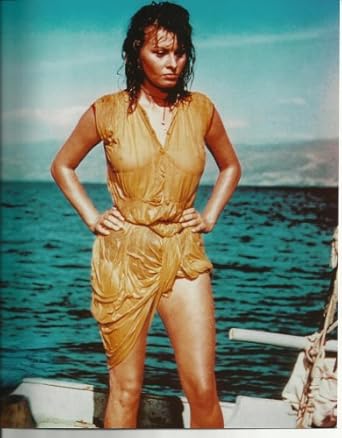
It would be interesting to know more specifically if this line of my ancestors were Italian or Greek. The two ethnicities seem to have some physical similarities. A Greek-American writer friend, Stephanie Nikolopoulos, and I were just recently talking about Sophia Loren, an Italian actress, who portrayed a Greek sponge diver finding an art treasure in the movie, "The Boy on a Dolphin."
Photo from "The Boy on the Dolphin," taken from Amazon
However, Italy and Greece seem very culturally distinct. I know it doesn't ultimately matter, and I may never know the answer to this question. It is merely interesting.
Along with this surprising finding, I also learn that I am six percent Iberian, either Spanish or Portuguese.
From www.crossed-pins-flags.com
Really? I would never have guessed it. This leads right into Surprise # 4.
Surprise #4 -- I'm a lot less Irish than I thought.
According to this test, we are only three percent Irish. That's much less than the 12.5 percent we thought it was. Compared to this, I have six percent Iberian DNA, which is twice the amount of Irish. This completely astonishes me.
I am reminded however of a theory I've read about the "black Irish," the dark-haired Irish. My Irish grandfather, my maternal grandfather, had very dark, dramatic and black hair and fair skin. So did his siblings and our other Irish ancestors. My mother also had black hair before it grayed. I have read an explanation, apparently a controversial one, that the "black Irish" got their dark-haired characteristics from Spanish invaders to Ireland. Suddenly, this theory seems very possible to me. Maybe some of that Iberian blood is actually through the Irish line of the family.
I suppose I've always assumed I must have a good dose of Irish DNA, because my skin is very fair. "A Whiter Shade of Pale" could be my theme song. I don't have the bronzed Sophia Loren skin tone. I don't tan. I fry. However, just because I have Mediterranean European DNA would not necessarily mean that I would reflect that in my apperance.
This is the exact reason why I didn't blink when retired New York Jets football player, Bruce Harper, told me he was Irish. I'm not name dropping. In fact, I'll confess that I know so little about professional sports that I was not familiar with his name at all before meeting him in the context of his work with the Boys & Girls Club, where he works on the board of directors for a local club. I met him while covering another dinner event for the paper -- my job does have its perks! -- and was seated beside him. I found him to be very personable.
From newyorksportscene.com
When he told me, "I'm Irish," being gullible, I answered, "Oh, really?" No, he doesn't look Irish, but I didn't think it was completely impossible that he might have some Irish DNA that didn't reflect itself in his appearance. He was joking with me. He went on to tell me how he had traveled to Ireland with his family and had jokingly convinced his children they were Irish in the same way he was teasing me. By the way, Harper has a great youth mentoring program, Heroes and Cool Kids.
Surprise #5 -- I am one percent Jewish!
One percent may be a tiny amount, but it is, nonetheless, interesting and surprising. I am very pleased to identify in some small way with the Chosen People. My first novel, currently out of print, "And the Violin Cried" has some Jewish themes, about a broken friendship that's repaired, a family that experiences anti-Semitic abuse and an heirloom violin that survives the Holocaust. I remember a former coworker, a Gentile, tellling my Jewish coworker that I was an "honorary Jew." I'd love to be considered an honorary Jew, although I'm not sure a goy can be the one to bestow that honor on me.
In another memory, in seventh grade, I was in line at the school cafeteria, and a boy asked me, "Susan, are you Jewish?" I said, "No." He then swung his arm in front of him, snapping his finger, in a gesture we all recognize as meaning, "Too bad." I was too stupid or too humble to understand his question had any romantic significance before that moment. On another day shortly after that, again in the cafeteria line, he asked me if I liked bagels. This time, I answered, "Yes."
I wonder what I or he would have said if I knew about that one percent at that time? His question could mean many things. He could have been asking if I was culturally Jewish, ethnically Jewish or if I was a practicing religious Jew. It's highly likely that the last option was what was most important to him.
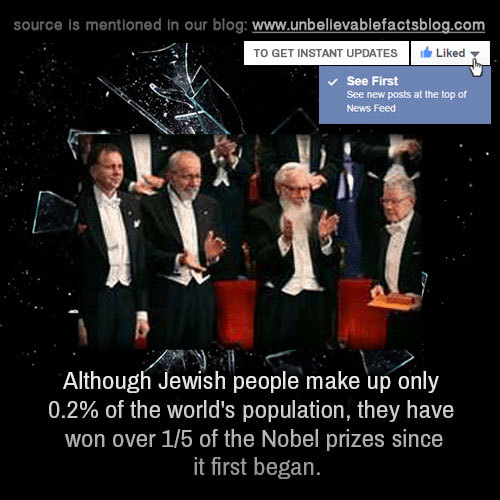
I came across some interesting statistics about Jewish people recently. Below is one of them.
I think this is a reflection of God's continued blessing on His Chosen People. Mom and I also were very curious and interested in a list we came across of notable Jewish entertainers. Some on that list were surprises. It seems there are many accomplished Jews in history as well as in current times. This all leads to an even more recent discovery over which I stumbled, much along the same theme. I now follow Youtuber Grant Woolard who has some very creative videos, including this parody of the Beach Boys' "God Only Knows What I'd Be Without You?" Disclaimer: I think his intentions are meant to be flattering, but I only wish he left Monica Lewinsky out of this, since there are better Jewish female role models he could have chosen.
So, what will I tell people now if they ask about my family history or ethnic background? I can no longer name just three or four countries of origin. Do I go through the whole list and give all of the percentages? Perhaps, I could, or perhaps I could use comedian Steve Carrell as a model. I had read that when someone asked him what sort of accent he did for the Gru character in "Despicable Me," he apparently answered, "You know Europe? From there." I think that could be my answer to this question. "You know Europe? From there."